
Spring School
Avoid costly mistakes and learn the basics of spring technology. Choosing the wrong spring can be expensive. How sure are you that your design has the right wire diameter? Or that the surface treatment you have chosen meets the requirements?
At the Spring School you gain the knowledge that saves both time and money.
Choosing the spring wire is extremely important
If you need help manufacturing a spring, there is a lot to consider. For example, which type of spring wire is best suited. Do you know the differences between:
- •Patented cold-drawn unalloyed wire
- •Oil-hardened spring wire of unalloyed steel
- •Stainless spring wire?
What all spring wire has in common is that the wire has: high yield and tensile strength, high fatigue strength and relaxation resistance. In other words, the wire must withstand being bent and stretched many times relatively tightly and still spring back.

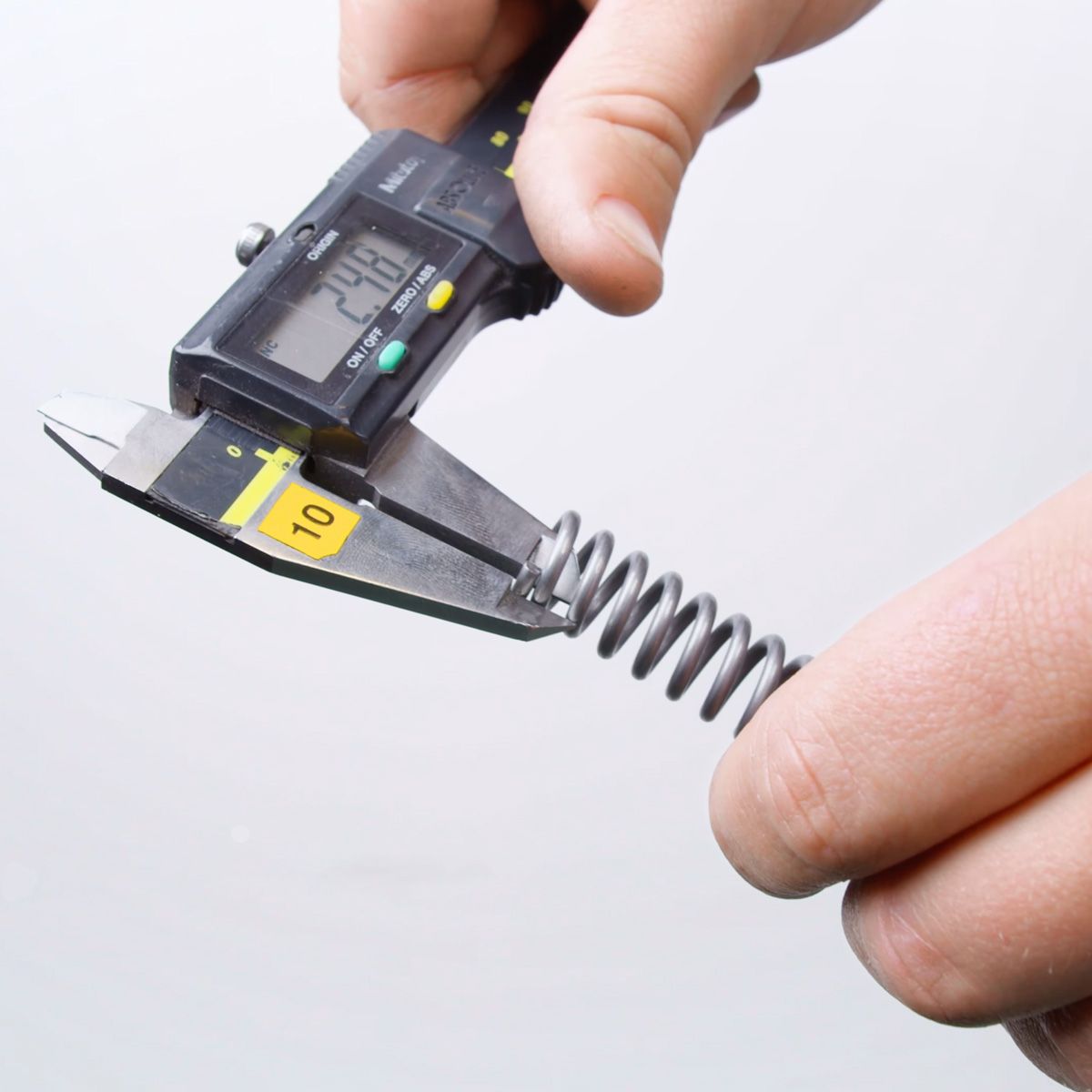
Are you measuring your compression spring correctly?
Small deviations in measurement can have major consequences for both dimensions and force. To ensure that the compression spring delivers the right load, you need the right method, the right reference points and the right understanding of how the spring actually works.
In our white paper we go through how to measure correctly, how to verify the force and which parameters affect the result. You also get guidance on material selection and how different types of spring steel affect performance and service life.
Do you want to be sure that your compression spring is correctly dimensioned from the start?
Download the guide for a clear, step-by-step walkthrough.
The Spring School is on YouTube
Do you know which spring wire is best for your design?
In this video we go through the differences between untreated, oil-hardened and stainless spring wire, and when each option is the right choice.
Which spring types are most common and how do they differ?
Which spring type should you choose for your design? We go through compression springs, torsion springs, extension springs and strip parts, and when they are used.
Why are tolerances often wider for springs than for machined parts?
Spring wire is an elastic material that is affected by forming, heat treatment and residual stresses – which is why tolerances are governed by special European standards, which we at EWES work to.
What does spring technology actually involve?
For a spring to deliver the right performance at the right cost, you need to take space, temperature and environment into account – already in the design phase.
The right surface treatment is crucial to the spring's service life and function
We explain when electrolytic surface treatment is the right choice, when zinc flake gives better protection, and which benefits and limitations you need to be aware of.
Post-treatment affects the spring's strength and service life more than many think
We go through the most common methods – shot peening, presetting and tempering – and explain how they improve performance and resistance to fatigue.
Learn more about springs in practice
At the Spring School we go through how to optimise function, service life and performance in your designs. We can tailor a seminar for your company, or you can join one of our scheduled sessions.
Fill in your details and we will get back to you with suggestions for format and dates.